From the archive: originally published 2013
ISSTC
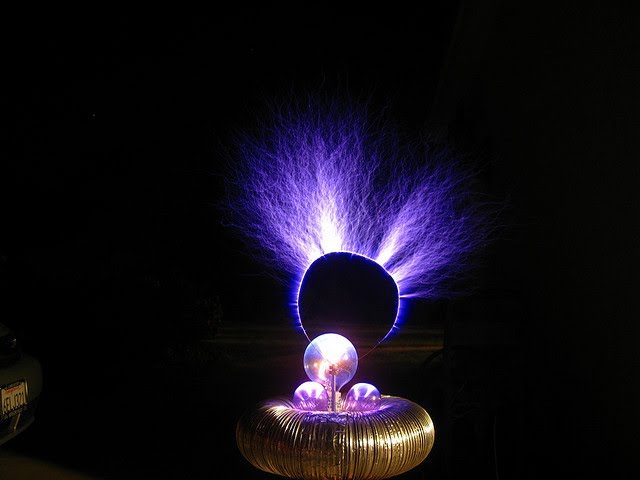
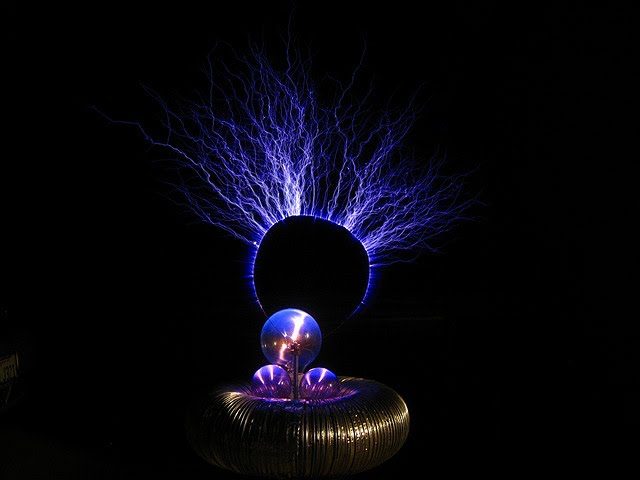
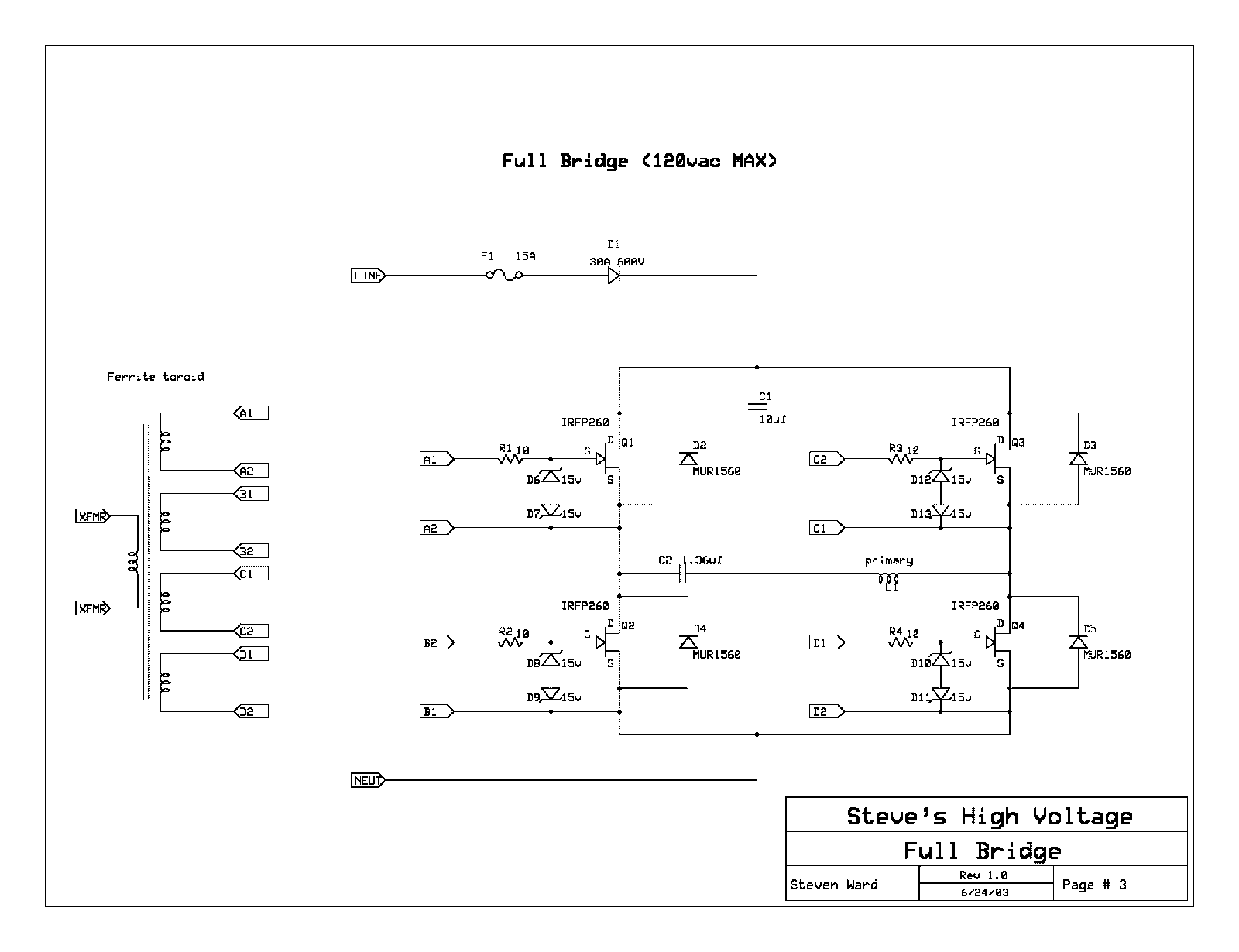
The ISSTC or interrupted Solid State Tesla Coil was my first true Tesla coil. The primary is driven by a full bridge of IRFP260 MOSFETs and the system uses base current feedback.
Recovered from the old goodchildengineering.com (Wayback Machine copy). Text as published in 2013; specs are as built then.
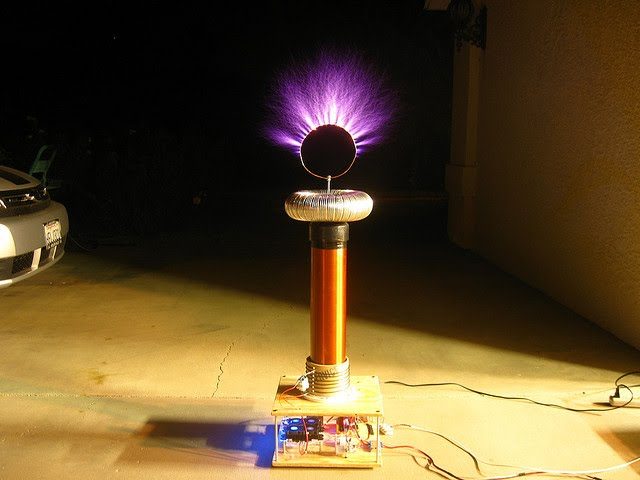
The ISSTC or interrupted Solid State Tesla Coil was my first true Tesla coil. I spent a lot of time researching and developing this system and learned a lot in the process. A standard SSTC has no resonant tank capacitor like a DRSSTC. It only has a DC block cap in series with the primary to make the primary winding look like an AC load. The primary is driven by a full bridge of IRFP260 MOSFETs. The system also uses base current feedback so that the H bridge always drives the system at the secondary natural resonant frequency.
Here are some specs for the coil:
| Secondary | 4.5 x 18 inch 30AWG winding on a 4” ABS pipe form 1800 turns |
| Primary | 6 x 5 inch 14 AWG solid on a 6” sono tube form 6 turns, 3 uF 300V DC blocking capacitor |
| Power Electronics | Full bridge oh IRFP260N 200VDC MOSFETs with GDT drive |
| Controller | Secondary base feedback driver |
| Toroid | 3 x 10 inch duct tube toroid |
| Input power | 120VAC from 10A Powerstat variac and ether half or full wave rectified |
The controller was based on some of Steve Ward’s work with ISSTC and SSTC.
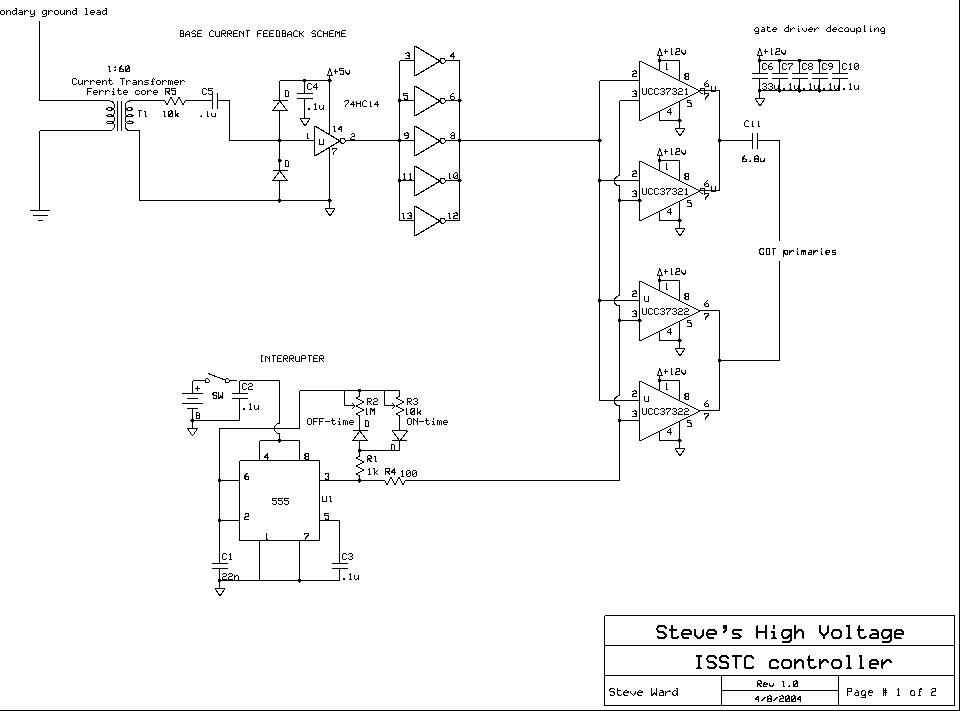
The only change made from Steve’s original design was the interrupter. Both a regular and also a musical zero crossing interrupter where built for this coil and performed rather well under most conditions. A guitar input was also added at one point so that guitar would be played through the coil in real time!
You can check out Steve’s other SSTC and ISSTC work here:http://www.stevehv.4hv.org/SSTCindex.htm
Testing and Running of the ISSTC
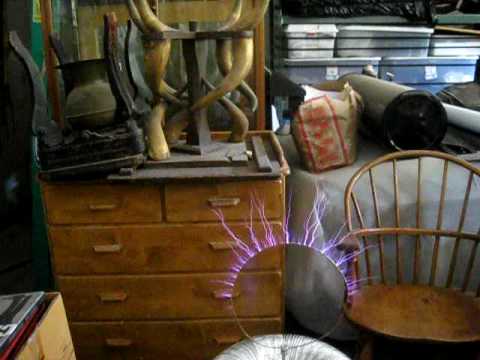
Testing for the most part went rather smoothly. Nothing failed and it fired up on the first try! It went on to make a max of 2 feet of spark and play music including guitar and MP3. The coil killed 4 MOSFETs in it’s lifetime and retired back in 2010.