From the archive: originally published 2013
Laser Harp
The Laser Harp is a musical instrument that uses laser beams as the interactive media that the user interfaces with to create the music. It sends a digital signal using the MIDI protocol to a computer or synthesizer.
Recovered from the old goodchildengineering.com (Wayback Machine copy). Text as published in 2013; specs are as built then.


The Laser Harp is a musical instrument that uses laser beams as the interactive media that the user interfaces with to create the music. The laser harp is a digital instrument meaning that it doesn’t create any sound by it’s self. Rather it sends a digital signal using the MIDI protocol to a computer or synthesizer where it is then converted into actual audio. This type of laser harp is know as “Frameless” in that there is no sensor at the end of each beam, rather it uses the principle of light reflected back from the player’s hand as a trigger. Although this method is vastly more complex than the framed design it much more versatile in that you can have as many beams as needed and also a much more compact design.
Generation 1 Laser Harp
Code name “Python”
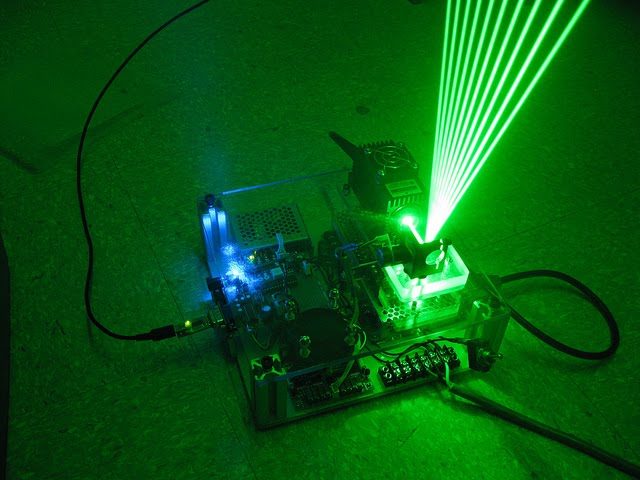
Hardware/Software Specs
- Arduino 16Mhz CPU
- 20Kpps Galvo
- 8-Bit 500Kb/s DAC
- 450mW Green DPSS
- Light to voltage converter Sensor + Opamp Beam Sensor
- C++ ~1500 lines of code
During development I tried many different DAC solutions. My first harp used an 8-bit digital SPI potentiometer. Although this worked fine for 10 beams it lacked the resolution and speed needed for a 12 or 13 beam harp. So I made the decision to move to a 12-bit split rail DAC with 2Mb/s Throughput made by Texas Instruments. This seems to be working well and is part of the development for the Generation 2 Harp.
The sensor used was a very simple light to voltage converter with internal gain. An external opamp and comparator where also added to squared off the output in prep for the MCU’s interrupt input.
The microcontroller used in the gen 1 harp was an Arduino atmega328p running at 16MHz. This MCU provided all the processing needed to both drive the DAC and read the data from the sensor.
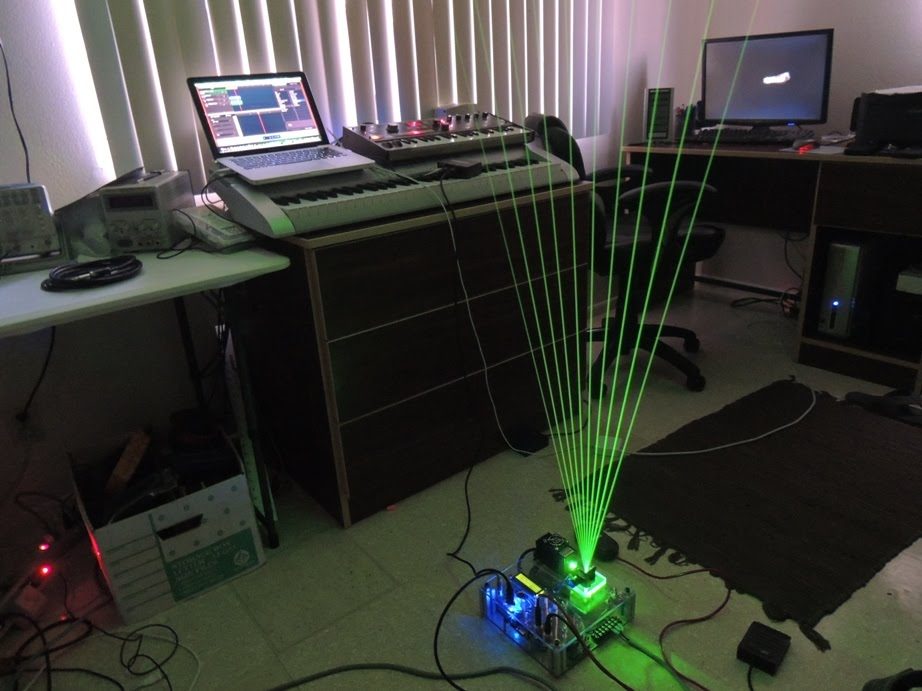
Video: https://www.youtube.com/watch?v=5d8P-k6MNIQ
Video: https://www.youtube.com/watch?v=j4dcPq6ZRYY
Generation 2 Laser Harp
Code name “Cobra”
The generation 2.0 laser harp is currently under development. The gen 2 will also be available for general sale to the public. Some of the features included in the Gen 2 harp will be:
- ATZMEGA 32MHZ CPU
- 500+mW Green DPSS
- 40Kpps Galvos
- 13 beams
- Programmable beams to note assignments
- Pedal Controls for open/close action and octave change
- New advanced interference proof beam sensor.
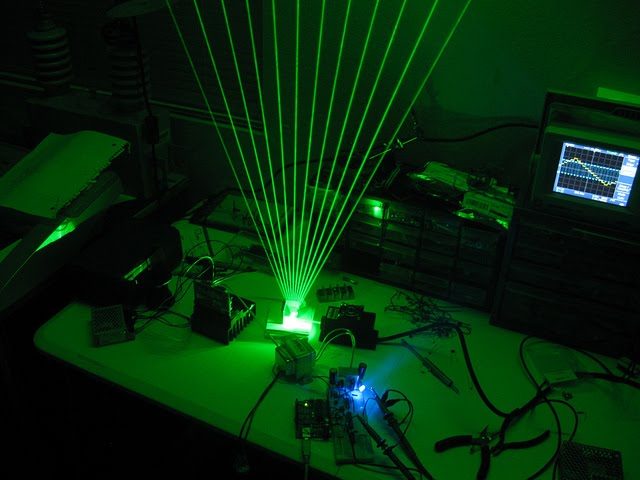
Here are some development photos
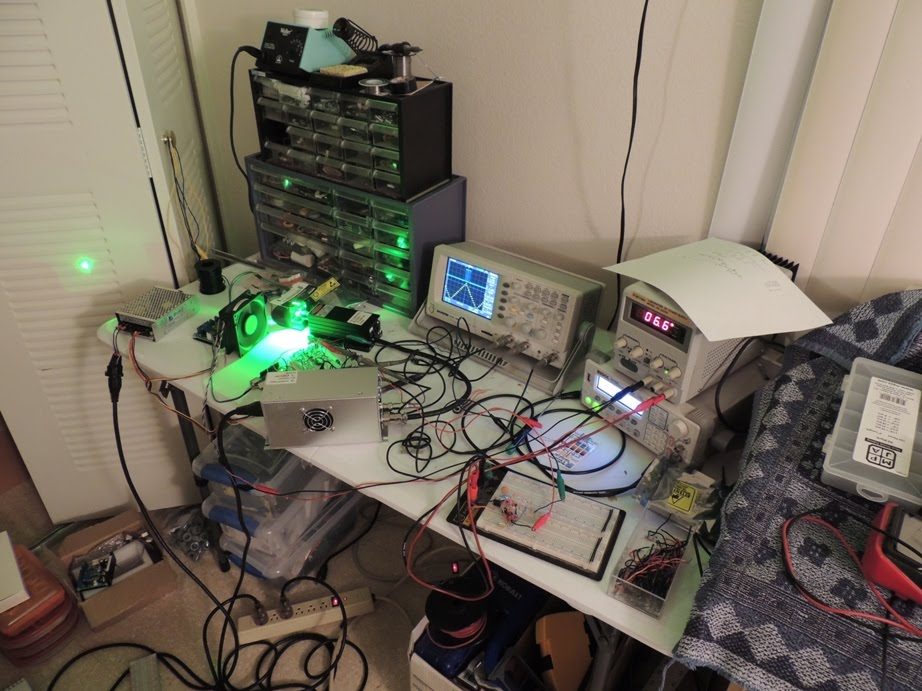
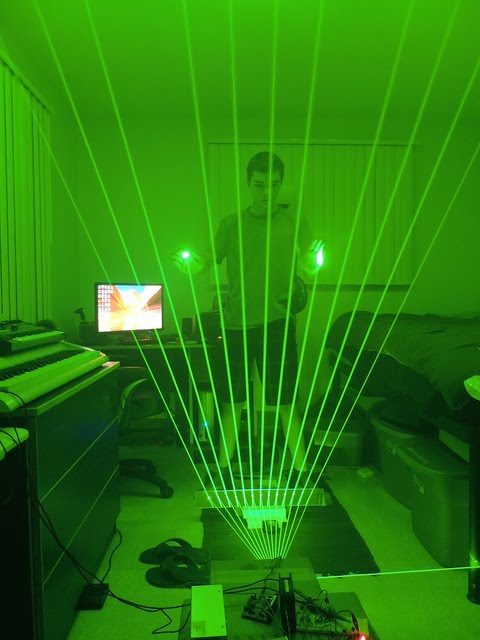
Video: https://www.youtube.com/watch?v=RnUlxCmk3Ks
More to come on Laser harp development.